

Vol. IV, No. 3, March 2026
- Editor's corner
- Mash-Up Events for Agritourism Farms and Ranches in 2026
- 2026 is the International Year of the Woman Farmer
- Does your farm have liability insurance coverage for E. coli disease?
- Births fell again in 2025
- Increasing the length-of-stay increases parking requirements
- Taking the grilled cheese sandwich to an epic level
- Designing kitchens to reduce long lines
Does your farm have liability insurance coverage for E. coli disease?
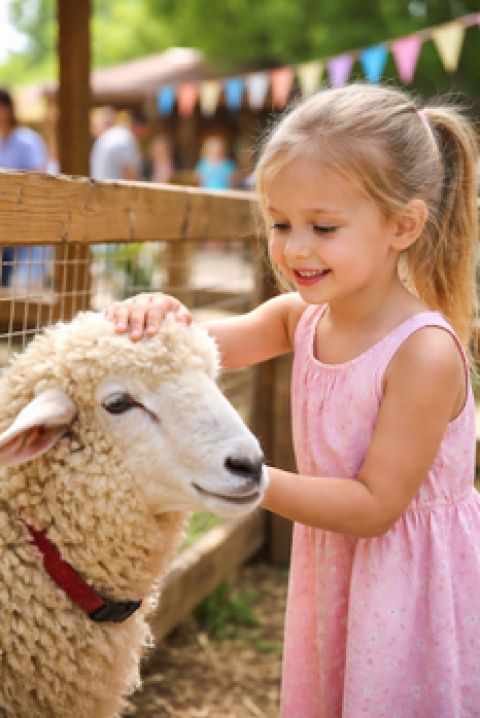
Many agritourism farms are at risk of infecting guests with E. coli O157 when they have areas where guests can interact with animals. E. coli 0157 infection can be especially harmful to children under 5 who don't have fully developed immune systems. It can cause permanent hemolytic uremic syndrome (HUS), a life-threatening disease that can cause kidney failure resulting in lifelong dialysis, a kidney transplant, or death. In the last 20 years, there have been 225+ reported cases of children infected with E. coli from visiting petting zoos or animal contact areas, resulting in 45+ hospitalizations, 30+ HUS cases, and three deaths (all 2-year-olds).
Ruminants (cattle, sheep, goats, deer) are the highest‑risk species for E. coli O157. The most recent outbreak was in 2025 at the Arizona State Fair petting zoo and was attributable to a pig. 16 children were infected, 8 hospitalized, and 8 developed HUS.
After the COVID‑19 pandemic, many insurance companies added or tightened “communicable disease” exclusions on liability policies. That means your basic general and excess liability insurance may not cover injury and lawsuits if a guest gets sick from a disease picked up at your farm, including zoonotic diseases (those that pass from animals to humans), including E. coli 0157. In some cases, companies offer special add‑on coverage, called riders or endorsements, that offer limited protection for disease claims. These usually have lower dollar limits and very specific rules about when they pay, such as requiring proof of contamination on your farm or an order from the health department.
Because of this, prevention is more important than ever. For animal contact and petting areas, detailed design and operational standards can help protect your guests, reduce the chance of a serious illness, and make your farm safer.
You can download our recommendations for designing safe animal petting, contact, and viewing areas as an web link or PDF.
Subscribe to Agritourism Today
Vol. IV, No. 3, March 2026
- Editor's corner
- Mash-Up Events for Agritourism Farms and Ranches in 2026
- 2026 is the International Year of the Woman Farmer
- Does your farm have liability insurance coverage for E. coli disease?
- Births fell again in 2025
- Increasing the length-of-stay increases parking requirements
- Taking the grilled cheese sandwich to an epic level
- Designing kitchens to reduce long lines