


Vol. IV, No. 3, March 2026
- Editor's corner
- Mash-Up Events for Agritourism Farms and Ranches in 2026
- 2026 is the International Year of the Woman Farmer
- Does your farm have liability insurance coverage for E. coli disease?
- Births fell again in 2025
- Increasing the length-of-stay increases parking requirements
- Taking the grilled cheese sandwich to an epic level
- Designing kitchens to reduce long lines
Designing kitchens to reduce long lines
Among the many challenges agritourism farms and ranches face during busy peak times is serving food and beverages fast enough so lines don't get too long.
A 2023 Waitwhile report, The State of Waiting in Line, found that the vast majority of people view waiting in line negatively. Nearly seven in ten (69%) said waiting in line elicits negative feelings, including boredom, annoyance, frustration, and impatience.
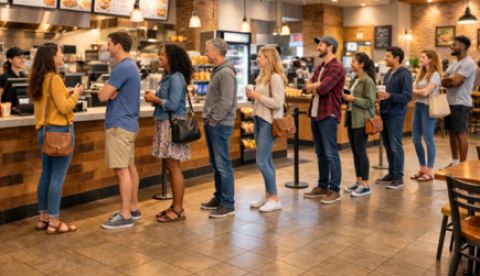
People will not tolerate lines this long.
Service at most agritourism farms is the same as at fast casual restaurants – order at one location and pick up at another. For fast-casual restaurant diners, such as at Panera Bread or Shake Shack, the average customer will only wait 8 minutes before abandoning a queue. Gen Z and Millennials show the lowest tolerance for waiting in line.
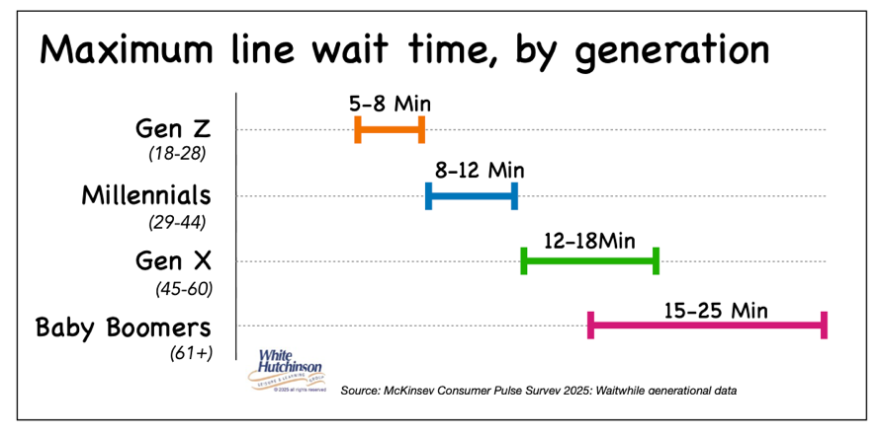
A study by Oracle found that 45% of fans at sports venues have given up waiting in line for food or drink. Nearly six in ten fans (59%) said they would spend more on concessions if wait times were cut in half. According to the study, ten minutes was the maximum acceptable wait time to buy food and drinks.
The bottom line is that if your food and beverage lines take longer than 10 minutes to order, you're losing sales and have dissatisfied guests.
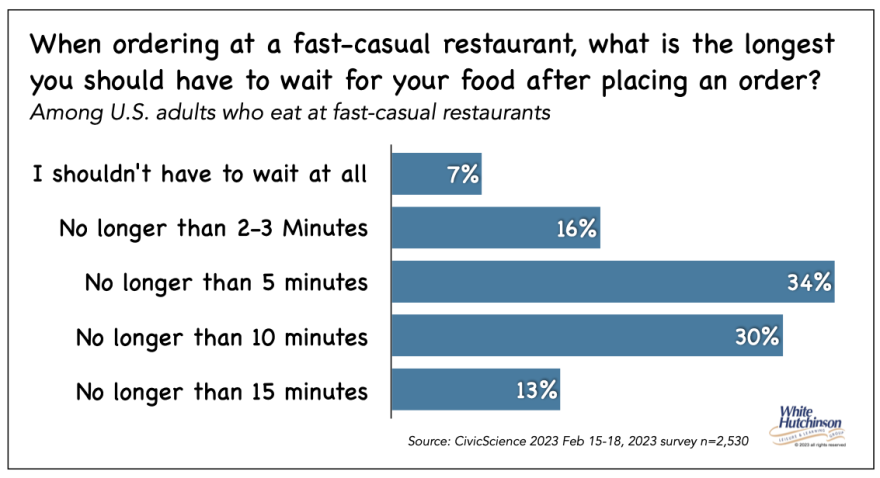
Another wait time consideration is how long it takes to get the food once it's ordered. A Civic Science survey of 2,300 people found that, at fast-casual restaurants, the highest concentration of maximum wait time falls between 5 minutes (34%) and 10 minutes (30%). However, nearly a quarter say the wait time at these restaurants should be under 3 minutes. Only 13% said they were willing to wait up to 15 minutes
There are a number of factors that can impact how quickly a kitchen can produce food, including the complexity of the preparation, the kitchen's design to meet the required capacity, staffing, etc.
One factor that impacts how fast kitchen staff can prepare food is the kitchen layout. Every step a kitchen staff takes in the process adds time and slows things down. Might not seem like it would make a difference, but it does. Let's say you're preparing a hamburger. What if you have to walk 10 feet to get the hamburger patty to bring to the grill, and then to get the cheese slice for a cheeseburger, you have to walk 8 feet in another direction, and then neither the plate nor the bun are nearby, and finally to take it to the pick-up location you have to go to the other side of the kitchen. All those steps add up to significant time.
There are two important considerations to avoid all these steps when designing a kitchen:
- Counters should only be 4 feet apart. Yes, only 4 feet. That's adequate space for staff to work on both sides. At one farm we visited, the food preparation area was at least 10 feet from the counter where the food had to be delivered to the guest.
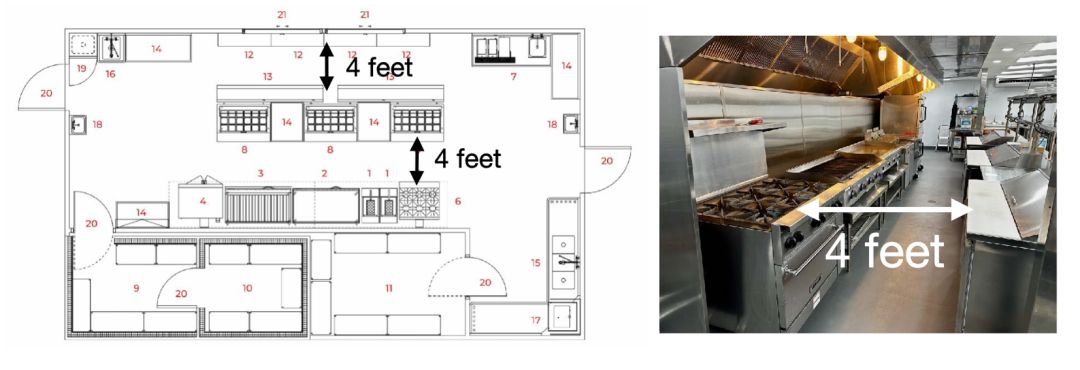
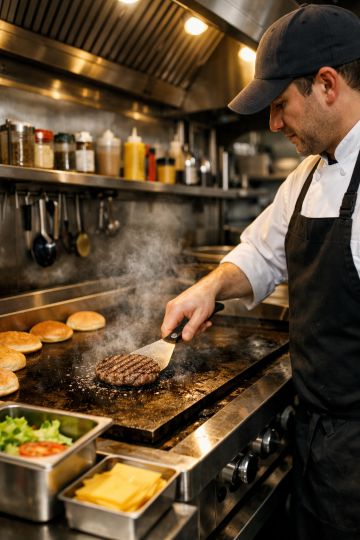
- The kitchen equipment should be located to minimize the distance between the different ingredients and serving ware. For example, for the cheeseburger, the refrigerator holding the patty and cheese should be close to the grill. Often it is underneath the grill. The toppings, such as lettuce, tomato, and onion (pre-sliced), could also be in the refrigerator or right next to the grill. The plates might be just adjacent to the grill. Organized this way, the person preparing the cheeseburger might only need to take one or two steps at most.
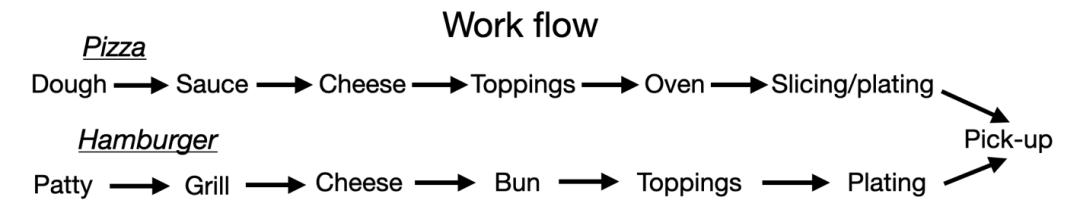
Designing kitchens for maximum efficiency is a bit of an art. The menu drives their design. If you don't use a professional kitchen designer, following these two basic principles will definitely help you speed up your food service, reduce line waits, and increase per capita food and beverage sales.
Subscribe to Agritourism Today
Vol. IV, No. 3, March 2026
- Editor's corner
- Mash-Up Events for Agritourism Farms and Ranches in 2026
- 2026 is the International Year of the Woman Farmer
- Does your farm have liability insurance coverage for E. coli disease?
- Births fell again in 2025
- Increasing the length-of-stay increases parking requirements
- Taking the grilled cheese sandwich to an epic level
- Designing kitchens to reduce long lines