

Designing safe animal petting, contact, and viewing areas
Prevent physical injury from animals that interact with children by selecting appropriate and more docile breeds, using younger animals, appropriate animal area design and fencing, and providing adequate supervision.
The following guidelines are to prevent visitors, especially children under 5 who don't have fully developed immune systems, from becoming infected with E. coli 0157, which can cause permanent hemolytic uremic syndrome (HUS), a life-threatening disease that can cause kidney failure resulting in lifelong dialysis, a kidney transplant or death.
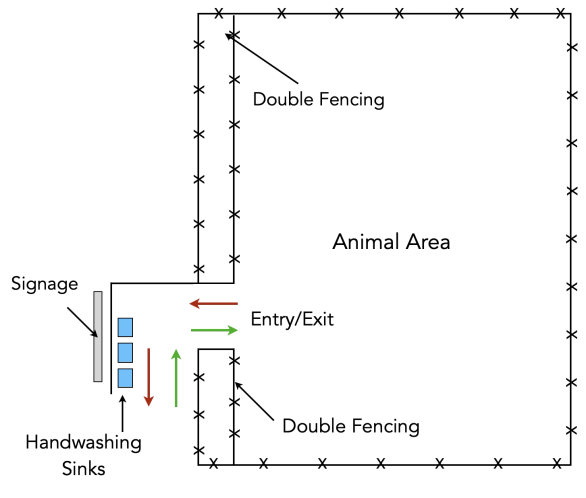
- Animal contact areas should be separated from play and eating areas by some distance, fenced, and gated. This includes double-fencing areas where guests could come into contact with animals outside the designated animal interactive area.
- No other animals are permitted in animal areas (except approved service animals).
- Animals that are not safe for children to interact with should be double fenced.
- Animals with poor temperaments or not meant for human interaction should be removed from areas where humans could interact with them, or double-fenced. A slanted feed tube can be put in the double fence to allow people to drop feed into it to feed the animals.
- Materials used to construct animal areas and pens that visitors can come into contact with should be non-porous, such as metal rather than wood, to enable more effective sanitization. Railings and fences that visitors can contact should be cleaned and disinfected regularly.
- Ruminants (cattle, sheep, goats, deer) are the core high‑risk species for E. coli O157.
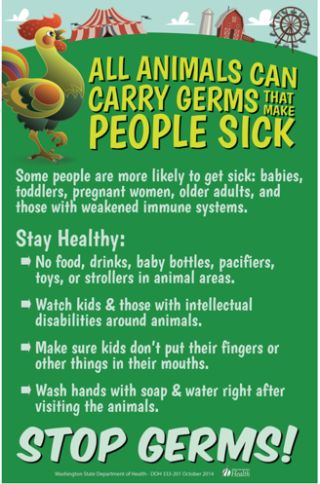
- There should be entry and exit transition areas. The entry area should include signage about the risk of contact with animals and educational information on the heightened risk for children under 5, people at high risk of infection or reduced immunity, and persons who are cognitively impaired or pregnant. Information should tell parents how to minimize risk to their children, including not allowing children to put their fingers in their mouths. Food, beverages, smoking, carrying toys, strollers (so the wheels won't have E. coli picked up from the ground to outside the animal area and possibly home), pacifiers, spill-proof cups ("sippy cups"), or baby bottles should not be permitted in the animal areas. The sign should be positioned to face people as they enter the animal area so it can't be missed.
- Have a clearly marked designated area near the entrance for visitors to leave strollers and related items (e.g., wagons, diaper bags, toys, pacifiers, and baby bottles).
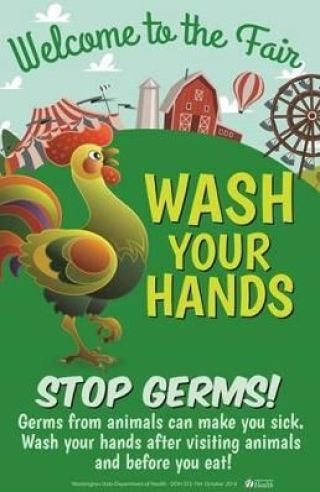
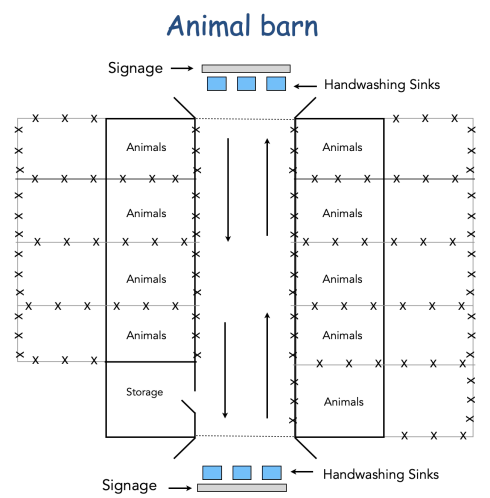
- The exit area should have adequate handwashing sinks (including ones low enough at 22" for easy use by children) with running water, liquid soap dispensers, and disposable paper towel dispensers within reach of each sink. Clear signage should instruct all guests to wash their hands and for parents to assist their children with handwashing. The handwashing stations and signage should be positioned straight out of the exit gate so exiting people face it and it can't be missed (see diagram). Handwashing signs should be readable at a distance, use bulleted text and graphics illustrating handwashing, and be multilingual if possible. Hand sanitizers are not an acceptable alternative to handwashing at animal areas since they do not kill e Coli.
- Ensure enough handwashing sinks are available for the expected number of visitors during anticipated peak attendance. If lines at handwashing stations are long, visitors may not wash their hands or may wash too quickly to keep the line moving.
- Schedule staff to monitor the handwashing station to encourage all visitors to wash their hands when leaving and ensure that soap and paper towels are always available.
- Have a system to record the cleaning schedule for hand washing facilities and all cleaning/refilling soap and paper towel refills.
- Employees should be trained on all of the following:
- The risk of disease and injury from animal interaction
- How diseases are transmitted from animals to humans
- How to respond to a guest injury from an animal
- How to communicate hand-washing needs with visitors after animal interaction
- Immediate reporting procedure
- Limit the number of visitors allowed in the petting area at crowded times. When the petting area is crowded, visitors are less likely to see handwashing signs or handwashing stations, or to wait in line to wash their hands.
- Animals should be kept clean, and hay, urine, soiled bedding, and uneaten food should be removed regularly. Manure should be removed promptly. If it becomes dry, subsequent air movement can result in the airborne spread of manure dust, which could spread infectious E. coli 0157 onto surfaces and into public areas.
- In the animal areas, animal feed and water, shovels, pitchforks, and other tools to remove animal bedding should not be accessible to the public.
- If feeding animals is permitted, only food sold at the venue for that purpose should be allowed. Animal food should not be sold in ice cream cones that children might eat.
- The Americans with Disabilities Act (ADA) requires animal petting areas to be accessible to people with disabilities. This means there must be accessible paths (walkways that people with walkers or in wheelchairs can traverse). So, unlike strollers, which can be restricted from animal areas, wheelchairs and other mobility assistance devices cannot. Have a place where wheelchairs and mobility devices can be sanitized after leaving the animal area. Procedures should be established for staff to assist people with sanitizing any parts of the devices that come in contact with animals or the ground upon exiting the animal area.
- Animal areas should be supervised by staff trained on how to minimize risk and intervene with children and parents whose children are not following safe practices.
- Animals should be monitored daily for signs of illness and ensure that animals receive appropriate veterinary care. Ill animals, animals known to be infected with a zoonotic pathogen, and animals from herds with a recent history of diarrhea or respiratory disease should not be exhibited (animals with e Coli won't show any signs of infection). To decrease the shedding of pathogens, animals should be housed in a manner to minimize stress and overcrowding.
- Food and beverage areas should be separated, distant, and uphill (to prevent contamination by groundwater runoff) from animal areas and have additional clearly visible outdoor handwashing facilities available.
- Pony ride areas should also follow the above standards.
- Farm ponds that the public can access should not be located where animals can access them or where water can become contaminated by runoff from fields or other areas that contain animals or animals visiting the pond.
- Agritourism venues that offer animal contact should:
- Post information on their websites about the risks of animal contact and include educational material for parents on how to minimize risks when visiting.
- Post signs with similar information at the entry to the facility.
- Offer a handout parent guide upon entry to their facility on how to enjoy the facility and adequately supervise their children's interaction with animals. This handout can include other information for parents about how their family can best enjoy their stay at the farm, a map of the facility, perhaps a farm history, and additional helpful information.
- For school groups, provide schools with information on the risk of infection when interacting with animals and the importance of handwashing, and include this with permission slips to go home. Have staff review safety measures with students and chaperons before they exit the bus or enter the animal petting area.
Additional resources and information:
- Sample sign at the entrance to the animal area
- Sample sign at the exit of the animal area
- Sample sign at the handwashing station
- Downloadable PDFs of many types of signs for animal petting areas
- National Association of State Public Health Veterinarians' Compendium of Measures to Prevent Disease Associated the Animals in Public Settings
- org has a series of checklists covering hayrides, corn mazes, inflatables, play areas, petting zoos, etc. They also offer walkthroughs with photos and questions, followed by explaining the correct answer.