


Vol. IV, No. 9, September 2026
Where farm-to-table meets dinner theater
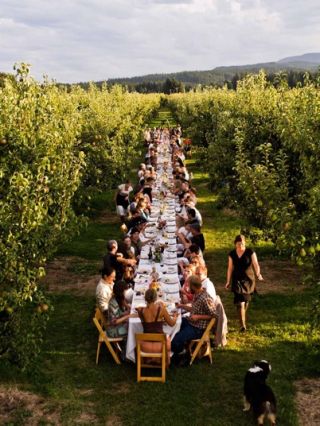
Farm-to-table dinners have become one of agritourism's hottest tickets, and it's easy to see why. Guests share local food at long communal tables, surrounded by fields, animals and the people who produced it. Add sunset, string lights and a chef-led seasonal menu, and dinner becomes an experience worth planning a trip and an Instagram post around.
On Oregon's Sauvie Island, Topaz Farm hosts weekly Farm to Plate dinners in summer, sometimes welcoming as many as 160 guests at a time. Diners gather beneath an approximately 500-year-old oak for a five-course, family-style meal shaped by what is ready to harvest that week. Many dates sell out well in advance. In Maine, Applecroft Farm offers long-table dinners among its gardens. At both farms, live-fire cooking adds theater as guests watch and smell their meals taking shape outdoors.
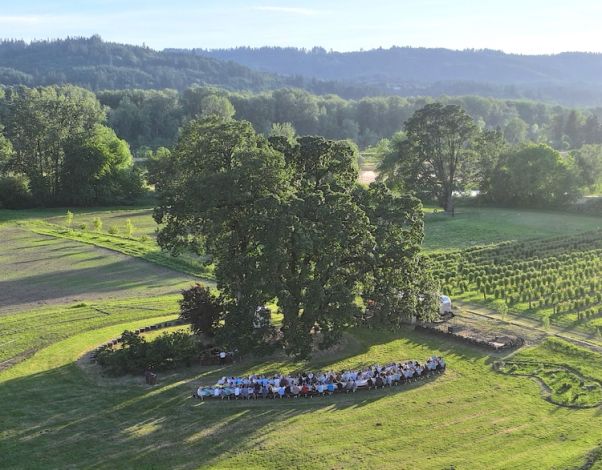
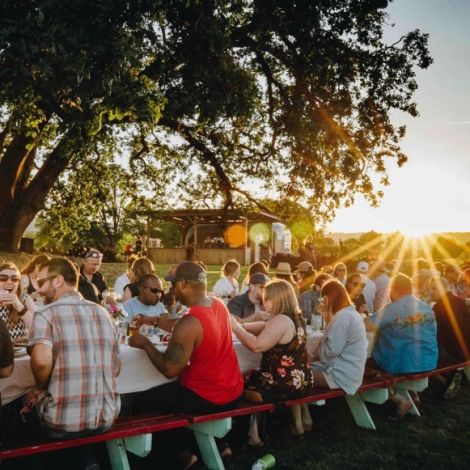
Farm to plate dinners at Topaz Farm in Portland OR
Why the growing appetite?
The popularity of these dinners is driven by several converging consumer trends: a desire for face-to-face connection, growing interest in food origins, support for local and sustainable producers, and a preference for memorable experiences over ordinary purchases. Their natural beauty and social media appeal provide another powerful draw.
Long communal tables turn strangers into tablemates, while interaction with the farmer and chef connects diners directly to the people and place behind the meal. In an increasingly digital and disconnected world, these gatherings offer guests the chance to slow down, meet others, and share a real-world experience.
Food values matter, too. Diners increasingly want to know that their food is fresh, seasonal, sustainably produced, and tied to a specific place. A meal in the field makes those qualities tangible rather than leaving them as claims on a restaurant menu. Guests can see where ingredients were grown, hear the farm's story, and sometimes watch the chef prepare their meal over an open fire. The photogenic setting also offers the kind of story diners want to share online.
The economics help explain why farms are setting more tables. Guests often pay $150 to $200 per person—far more than they might pay for a comparable meal at a farm-to-table restaurant—because they are buying more than dinner. The setting, storytelling, interaction with the chef and farmer, and connection to the land elevate excellent food into a memorable experience.
These dinners can also broaden a farm's audience beyond families with children who traditionally visit pumpkin patches, festivals and other daytime attractions. Long-table meals appeal to couples, groups of friends and adults celebrating birthdays, anniversaries and other occasions. They can be especially appealing to seniors seeking distinctive culinary experiences, opportunities to socialize and a deeper connection to local farms and food.
But what comes after farm-to-table? Perhaps it is “farm is table.”
At Treiber Farms in Peconic, New York, artist Allan Wexler and his collaborators took that idea literally. For their Farm Is Table dinner, farmers carved 30-foot seating troughs into the soil and elevated the weedy earth itself to serve as the table. Guests ate locally sourced tilefish, squash, mustard greens, and oysters, served on repurposed farm-irrigation equipment.
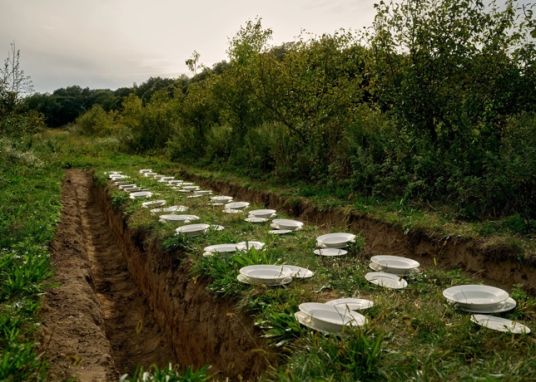
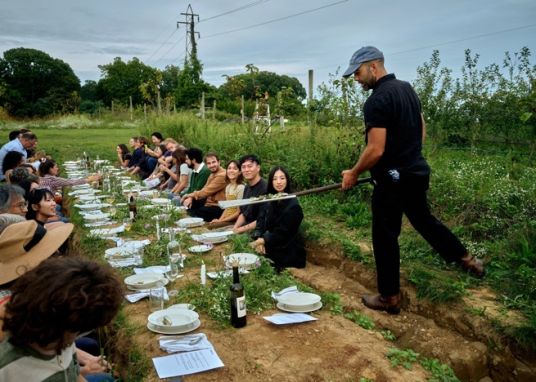
Farm is table dinner at Treiber Farms in Peconic, NY
The idea has since surfaced on another continent. At South Africa's Waterford Estate, workers spent nearly a month carving a table into the vineyard soil. Guests ate estate-raised Dexter beef, cooked over a fire and paired with wines grown in the surrounding soil.
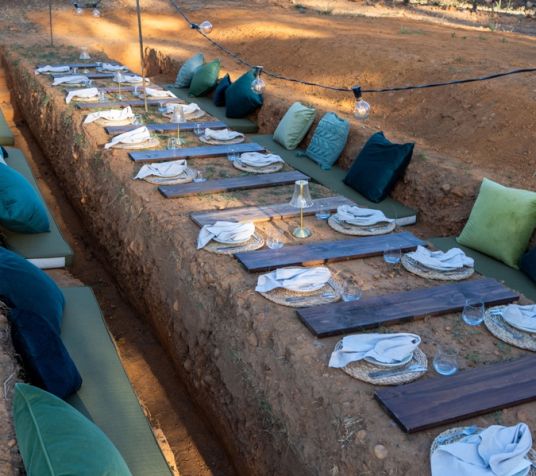
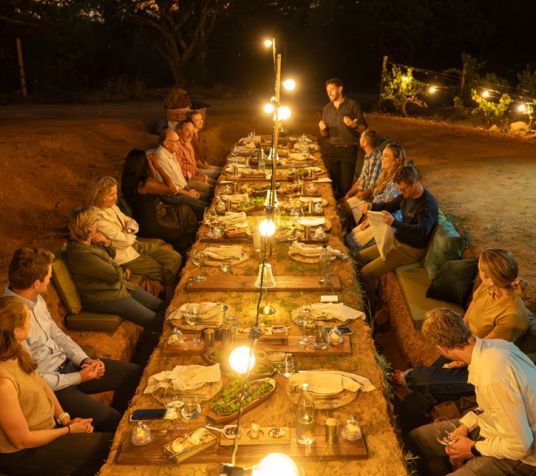
Farm is table dinner at Waterford Estate in South Africa
For farms and ranches, these dinners offer an opportunity to generate new revenue, showcase farm products, and build relationships with a broader guest base. A memorable meal can inspire first-time visitors to return for other events, seasonal activities, and direct-to-consumer purchases.
Subscribe to Agritourism Today