


Vol. IV, No. 4, April 2026
- Editor's corner
- Master planning for farm markets that also host festivals
- How to increase your per-capita sales and improve your marketing
- Avoid dividing your guests by generation or age.
- Families vs. couples and singles: a new value equation
- How to Turn Your Agritourism Venue into a Must-Visit Experience
Avoid dividing your guests by generation or age.
In agritourism, categorizing guests by generation or age may seem logical, but it often doesn't accurately reflect their preferences or behaviors or help create the most effective marketing strategies. Two Millennials can behave very differently; one might be a high-spending, food-obsessed farm dinner attendee, while the other is a budget-conscious parent seeking an affordable pumpkin patch outing. Meanwhile, a 30-year-old and a 60-year-old at a farm festival or on a guided farm tour might act nearly the same. Grouping Millennials, Gen Z, or Gen X as a single demographic encourages stereotypes and marketing clichés instead of targeted strategies that truly boost attendance, length of stay, and spending.
Effective segmentation begins with understanding visitors' motivations, behaviors, and values across all types of agritourism: U-pick farms, ranch and farm stays, food and other festivals, farm dinners, and educational activities like tours, workshops, and classes. Motivation or needs-based segments focus on why visitors come, such as family fun, food exploration, education and skill-building, connecting with nature, wellness, or seeking a rural escape. Behavioral segmentation examines how visitors visit; day trippers versus overnight guests, planners versus spontaneous visitors, once-a-year festival attendees versus regular farm market shoppers or class participants, short stops versus full-day experiences. Value-based segmentation identifies which groups generate revenue and profit; high-lifetime-value members or CSA customers, bulk buyers, premium event or workshop attendees versus low-spending but volume-driving crowds at fall festivals.
When you focus on occasions, behaviors, and values, you can customize offers like family bundles, farm-to-table dinners, guided tours, hands-on classes, workshops, and relaxing wellness sessions. This method also enhances scheduling, staffing, and the accuracy of targeted communications better than any generational or age label could.
A helpful way to classify guests for agritourism experiences is by:
- Purchase behavior: first-time visitors, repeat guests, high-frequency regulars, lapsed customers; full-price buyers versus deal-seekers.
- Engagement behaviors: digital participants (browse, save, share), planners versus spontaneous visitors, reviewers/advocates versus silent users.
- Occasion: family outing, date night, group celebration, solo relaxation, tourist.
- Benefits sought: social connection, challenge or gamification, food-centered experiences, learning or education, escape or immersion.
- Value tier: high lifetime value repeat customers, price-sensitive experimenters, dormant yet high-potential segments.
Each segment then gets personalized offers, pricing, and marketing based on their specific motivations and needs.
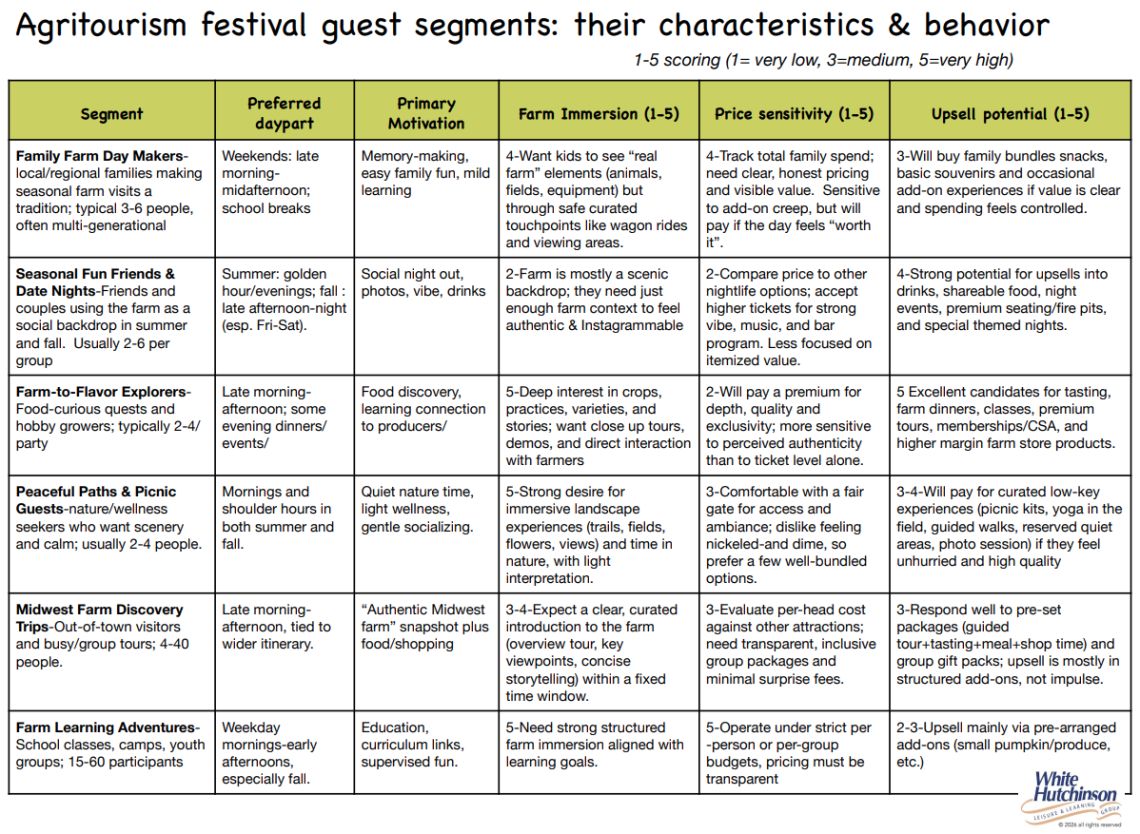
The following chart shows the different segments along with their characteristics and behaviors for a typical agritourism farm that hosts various festivals. To see the chart in a larger size, you can download it as a PDF HERE.
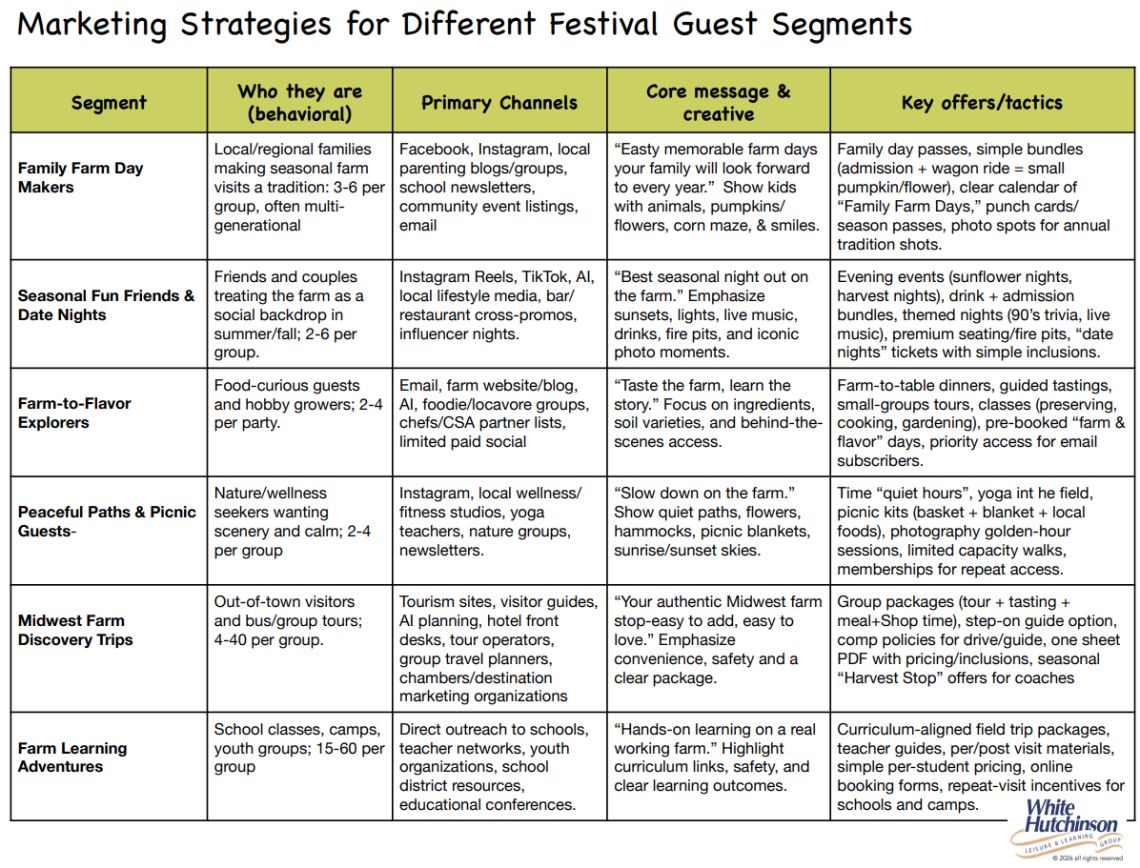
The chart below shows the marketing strategies for each segment. (To view it larger, you can download it as a PDF HERE.)
Each type of experience an agritourism venue provides will attract different, unique guest groups. The example below shows the guest groups for three different types of agritourism activities - festivals, farm dinners, and tours and classes. (To see the chart in a larger size, you can download it as a PDF HERE.)
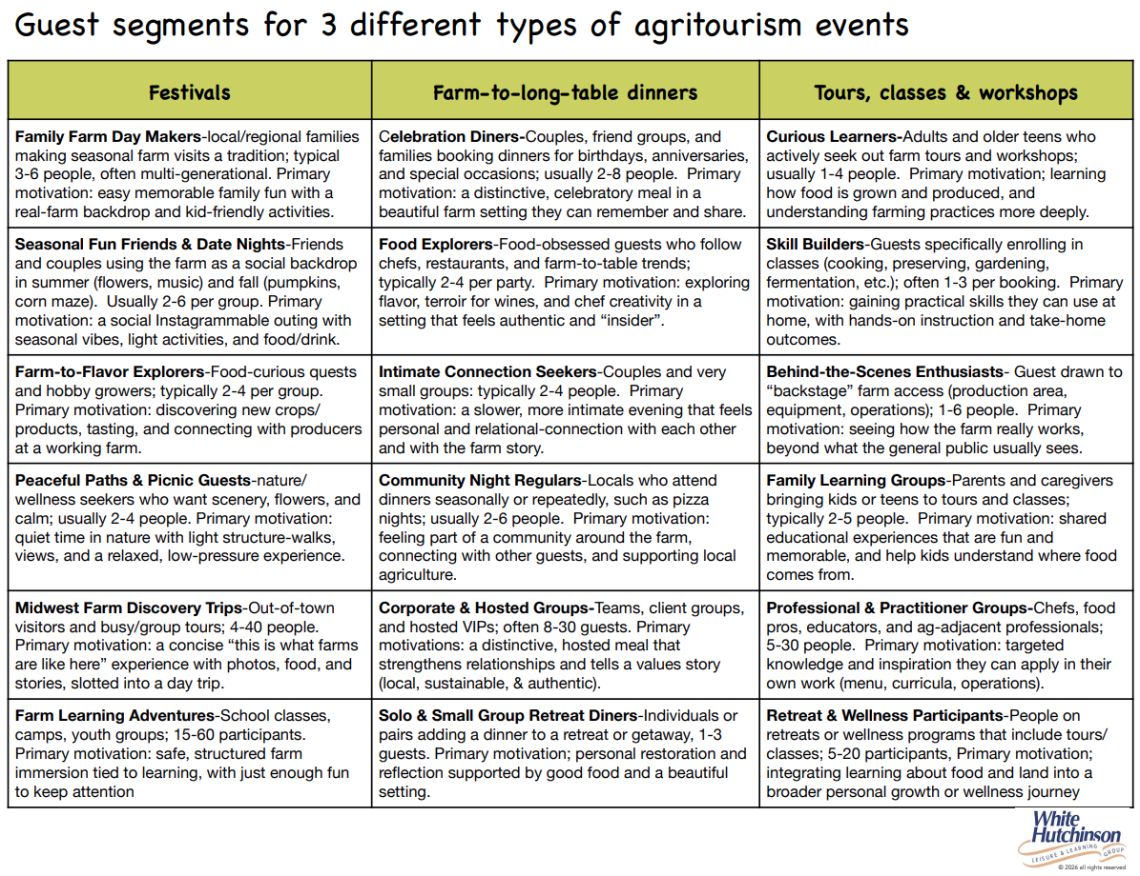
It's important not to divide your guests by generation or age because not everyone within a group is the same, and people from different groups can be similar. This article and its charts clearly demonstrate a more effective way to categorize and market to your guests.
Subscribe to Agritourism Today
Vol. IV, No. 4, April 2026
- Editor's corner
- Master planning for farm markets that also host festivals
- How to increase your per-capita sales and improve your marketing
- Avoid dividing your guests by generation or age.
- Families vs. couples and singles: a new value equation
- How to Turn Your Agritourism Venue into a Must-Visit Experience