
This is a print-friendly version of www.whitehutchinson.com/news/lenews/2026/august/article102.shtml

[ Index of Previous eNewsletters (www.whitehutchinson.com/ news/ lenews/ previous.shtml) ]
For decades, much of the location-based entertainment industry has described itself as family entertainment. That label has quietly shaped everything from attraction mixes and décor to menus, hours, and marketing. It also fosters a costly assumption: that households with children are the largest audience. They are not. Adults, especially younger adults, represent the broader and more valuable market.
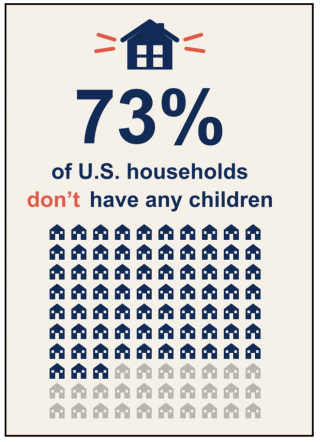
The demographics are decisive. In 2024, among U.S. households headed by people ages 21 to 45, only 29% include children in the age group that most family entertainment venues attract. In other words, seven in ten of these households do not have children. In fact, across all households, nearly three-quarters (73%) don't have children of any age.
For years, there were few adult-oriented LBEs other than Dave & Buster's. Adults visiting without children either made do with family entertainment centers or did not visit LBEs at all.
Over the past decade, the rise of adult-oriented LBEs, including competitive socializing and social eatertainment, has made traditional family entertainment centers less appealing to adults.
Today, adults are seeking venues designed for them, especially later in the evening, when many prefer an environment without children. This includes parents who leave their children at home for an adult night out. Younger adults actively seek out-of-home experiences that combine play, food, drink and social connection. Their motivations are both social and recreational.
That makes competitive socializing and social eatertainment with bowling, darts, shuffleboard, mini golf, immersive games, and other participatory concepts well aligned with how younger adults want to spend their leisure time. They can visit on weeknights, stay later, purchase alcoholic and nonalcoholic beverages, order shareable food, and return for leagues, date nights, celebrations, or workplace gatherings. Their spending is not diluted by children, whose admission and food purchases are typically lower.
Winning the adult market requires more than adding a bar next to child-focused attractions. Adults notice acoustics, lighting, seating comfort, service, cleanliness, food quality, and whether the games encourage conversation and friendly competition. They also respond well to reservations, transparent pricing, rotating programming, and environments worth sharing online.
Family concepts can still succeed, but “family” should be a deliberate segment rather than the industry default. Before selecting attractions or signing a lease, operators should study household composition, incomes, lifestyles, and leisure preferences in their trade area, as well as the markets the competition is capturing. The larger opportunity may be standing right outside the traditional FEC frame: adults seeking a polished, social reason to leave home.
THE BOTTOM LINE: For new LBEs, younger adults represent a larger addressable audience, more visit occasions, and greater per-capita spending potential than households with children.
Subscribe to monthly Leisure eNewsletter (www.whitehutchinson.com/ subscribe/ lenews/ )
[ Index of Previous eNewsletters (www.whitehutchinson.com/ news/ lenews/ previous.shtml) ]
© 1999 - 2026, White Hutchinson Leisure & Learning Group, Inc.
The contents of this website and eNewsletters are protected by USA and international copyright law. Permission is granted to download and print single copites of any of the contents or articles for personal use. No other copies may be made. Educational institutions may obtain permission to make multiple copies for classroom use by e-mailing us with details. The contents of articles may be quoted provided credit is given to the "(author's name), White Hutchinson Leisure & Learning Group, Kansas City, MO, USA". All other rights for use or reproduction of the contents and articles are reserved.