
This is a print-friendly version of www.whitehutchinson.com/news/lenews/2024/december/article105.shtml

[ Index of Previous eNewsletters (www.whitehutchinson.com/ news/ lenews/ previous.shtml) ]
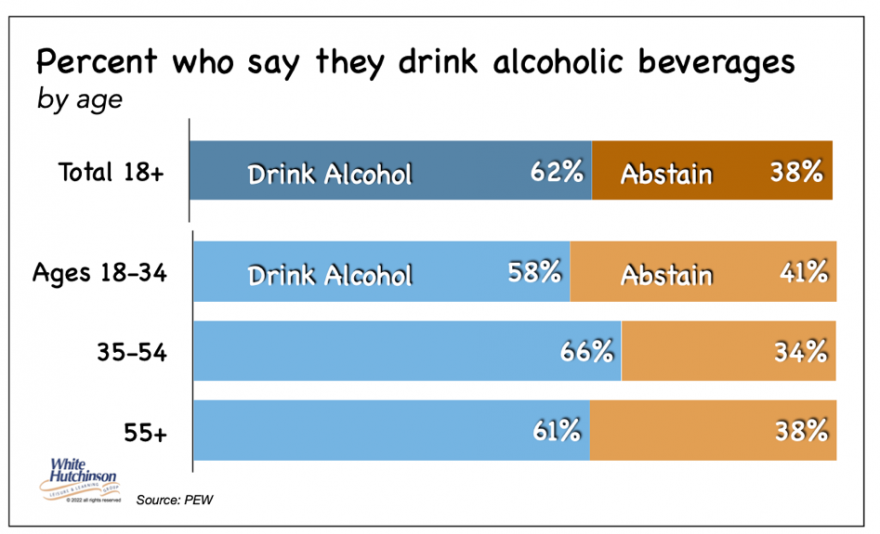
Back in the mid-1970s (1976-1978), 71% of adults drank alcoholic beverages. This year (2024), it has decreased to 62%. Among younger adults, a primary target market for most location-based entertainment venues (LBEs), the drinking rate this year was only 58%.
A large percentage of alcoholic-drinking adults are curious about living a sober-curious lifestyle. This group expresses interest in reducing or eliminating their alcohol consumption. The sober-curious movement has gained strength over the last year. In 2024, 41% of all Americans plan to drink less, up from 34% in 2023.
The percentage of drinking adults who are curious about switching to a sober lifestyle has increased from 12% in 2020 to 19% in recent surveys.
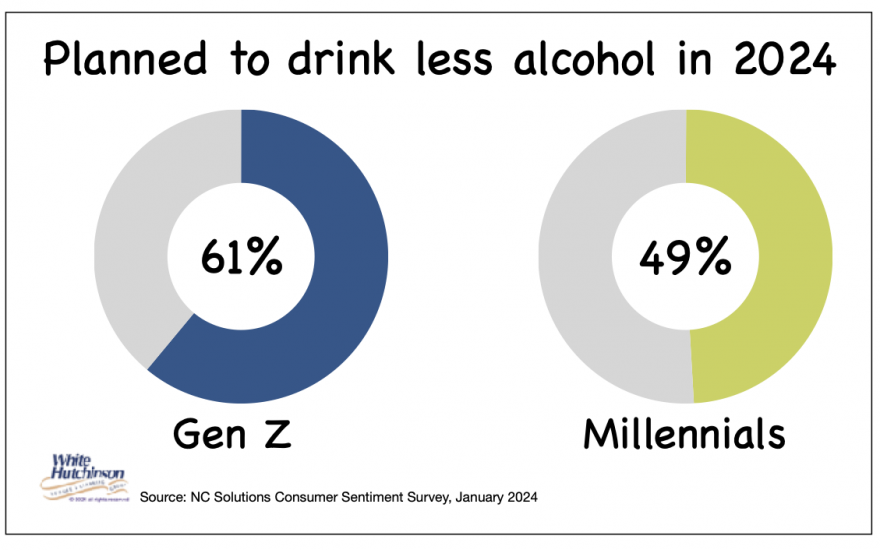
The sober-curious movement is strongest among young adults. Generation Z (born between 1997 and 2002) shows the highest interest in reducing alcohol consumption, with 61% having planned to cut back in 2024, a 53% increase from 2023. Millennials (born between 1981 and 1996) also show increased interest, with 49% having planned to drink less in 2024, up 26% from the previous year.
These statistics indicate a growing trend toward alcohol reduction and abstinence among U.S. adults, particularly among the younger generations.
When we combine those young adults who don't drink alcohol (41%) with those who were sober-curious about abstaining, assuming one-half of those intending to do so did (one-half of 19% = 9.5%), we estimate that 50% of young U.S. adults now abstain from alcohol. If we add the approximate 50% of Gen Z and Millennials drinkers who are interested in reducing their alcoholic consumption, which means on many occasions they are looking for nonalcoholic alternatives, we have around 70% of young adults who don't drink, have stopped drinking in 2024, or are reducing their alcoholic consumption. This is now the majority of young adult attendees at LBEs.
Nonalcoholic alternatives, once a niche category, have become mainstream. Mocktails are twice as popular as nonalcoholic beer. Sober-curious consumers surveyed by NCSolutions are twice as likely to choose a mocktail than a nonalcoholic beer. One in five (19%) Americans said they drank a mocktail in 2023, compared to one in 10 who drank nonalcoholic beer. More than one-third (37%) said they drank mocktails most often.
Mocktails were especially popular among younger generations in 2023. 37% of Gen Z said they drank mocktails last year, compared to 16% who said they had nonalcoholic beer and 10% who said they drank nonalcoholic wine. Among millennials, 30% said they drank mocktails in 2023, compared to 15% who drank nonalcoholic beer and 9% who had nonalcoholic wine.
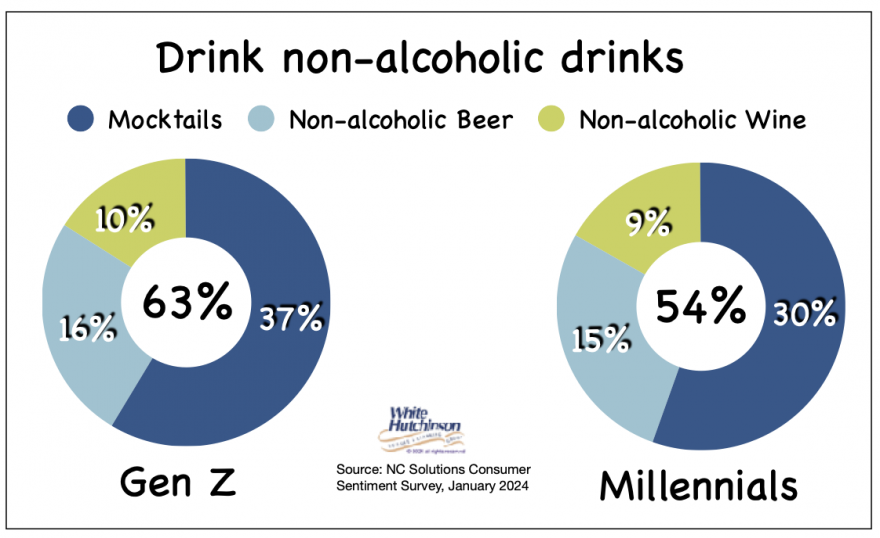
These non-alcoholic drinking statistics confirm the growing trend toward sober-curious alcohol reduction and abstinence among U.S. adults, particularly the younger generations, as the percentages of non-alcoholic young drinkers are higher than the 38% of young adults who are not drinkers.
The new reality is that the non-drinkers plus the sober-curious are now the majority of adults, even more so among young adults. For LBEs to maintain their appeal and profit margins, their bar menu needs to offer a wide selection of nonalcoholic beverages, with most being zero-proof imitations of the alcoholic versions.
Subscribe to monthly Leisure eNewsletter (www.whitehutchinson.com/ subscribe/ lenews/ )
[ Index of Previous eNewsletters (www.whitehutchinson.com/ news/ lenews/ previous.shtml) ]
© 1999 - 2026, White Hutchinson Leisure & Learning Group, Inc.
The contents of this website and eNewsletters are protected by USA and international copyright law. Permission is granted to download and print single copites of any of the contents or articles for personal use. No other copies may be made. Educational institutions may obtain permission to make multiple copies for classroom use by e-mailing us with details. The contents of articles may be quoted provided credit is given to the "(author's name), White Hutchinson Leisure & Learning Group, Kansas City, MO, USA". All other rights for use or reproduction of the contents and articles are reserved.